
In an interview with GamesRadar+, former World of Warcraft lead designer and current Notorious Studios director, Chris Kaleiki has spoken about his perception of the changes shaping the game industry. Kaleiki, who is currently working on the ‘mini MMO’ project Legacy: Steel & Sorcery, believes that the next big thing is the emergence of AA games. According to him, these titles, which fall between indie and AAA in terms of size and cost, are what the market needs most. The independent scene is becoming increasingly crowded, and AAA games are more difficult and expensive to produce than ever. As a result, AA games represent an excellent solution for both developers and players.
Kaleiki’s point of view is undoubtedly due to his long experience in the field, in particular his time at Blizzard Entertainment. Today, as founder of Notorious Studios, he focuses on the AA segment, which he sees as “more substantial than indie, but they’re not going to make billions of dollars”. In his view, this fast-growing segment represents the future of the industry, offering a combination of artistic freedom, sound financial management and acceleration of the game development process.
A widening gap
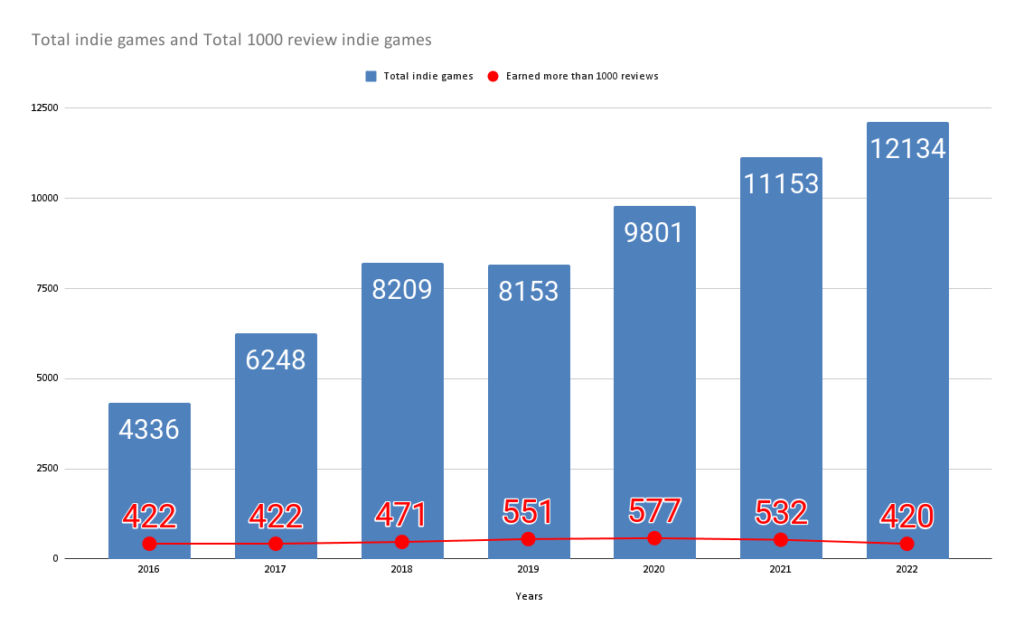
One important aspect that Kaleiki highlights is the state of the indie and AAA markets. He points out that the independent development scene is flooded. Platforms like Steam release a LOT of indie games, therefore, it is hard for a title to stand out. Indie games are definitely a medium where all types of new ideas are tried out in an innovative way. However, as there are lots and lots of submissions, many games end up getting lost in the shuffle.
(From howtomarketagame.com)
On the other hand, an AAA game takes a LONG time to develop. Kaleiki explains that the number of AAA games released each year is obviously nowhere near that of independent games, due to the high costs and complexity of production. In recent years, development times have risen sharply, budgets have exploded, and the risks associated with AAA projects have increased tenfold. In fact, at present, the chances of success in developing AA games are greater and greater because of the major divide that exists between independent games and AAA games.
The appeal for developers
AA games are often preferred by developers because they have many advantages over AAA games. Kaleiki mentions that there is less bureaucracy and greater agility when working on smaller-scale projects. He adds that in AAA development, developers predominantly specialize in specific areas and work within large teams where their individual contributions can feel minor. In contrast, AA development offers a much more interactive and hands-on approach, where team members can take on multiple roles and contribute directly to the final product.
This characteristic is one of the reasons why working on AA titles is a choice of many Notorious Studios developers, including former AAA veterans. Kaleiki mentions that “Most AAA devs who have joined our team really don’t want to go back ». Many developers seem attracted to the likeliness of working on something that is big enough to be meaningful but not so big to be bound by AAA’s “bureaucracy”.
Financial viability x Visibility
Kaleiki sees the game industry as an ecosystem, with indie, AA and AAA games living side by side. Although he has said that independent developers will always be interested in releasing affordable games as opposed to big-budget AAA blockbusters, he believes that the AA games sector will be the one to play a major role in bridging the gap between the two.

(From reddit)
He likens AAA games to “modern-day Colosseum[s]”, which are very exciting to build, but no longer possible to develop in such quantity. Titles like Elden Ring and Dark Souls, both developed by FromSoftware, represent the greatest success of AAA games, but their size and complexity make them almost impossible to produce at a recurring rate. Conversely, AA games are a much more sustainable model, as they allow developers to undertake still large-scale projects that are less risky and less financially demanding.
Legacy: Steel & Sorcery
Notorious Studios’ next game, Legacy: Steel & Sorcery, can be considered an excellent representative of AA games and what they can bring. Described as a PvPvE extraction RPG with “MMO styling” and roots going back to the legendary Ultima series, Legacy: Steel & Sorcery is priced at $24.99 and will be released on Steam in Early Access on February 12.
This title seems to offer players plenty of opportunities for exploration and discovery, while being less vast and expensive than an AAA game. This may seem like a good compromise in the current context, where players generally like to jump from one title to another fairly regularly, as new releases come along.
Wait & See
The game industry is constantly evolving and the introduction of AA games represents a major transformation in the games development and consumption process. For developers, AA games offer a blend of the creativity of indies and the support and visibility of AAAs (to a lesser extent, of course). What’s more, AA games might turn to be the key to inventive projects that appeal to players, without the need for considerable funds or long development schedules.
As it prepares to enter Early Access, Legacy: Steel & Sorcery is a testament to the potential of AA games. If Kaleiki’s idealism is left to the test of time, one thing is certain: the AA sector is one to watch, and its repercussions on the industry could be significant.